Transcranial PhotoBioModulation
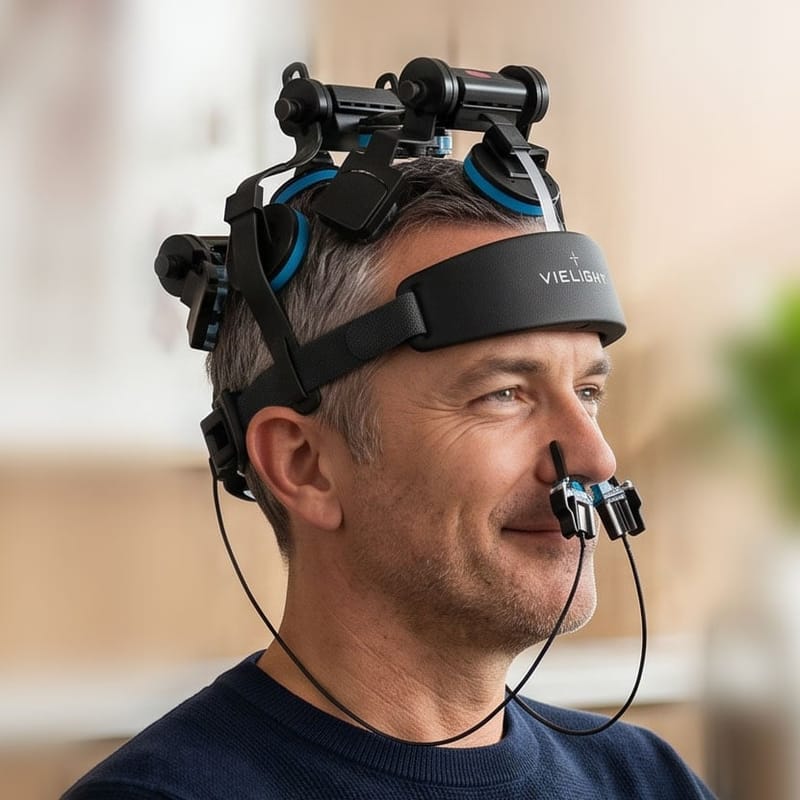
Transcranial Photobiomodulation
Transcranial Photobiomodulation (tPBM) is an advanced, non-invasive brain therapy that uses red and near-infrared light to stimulate brain cells and support neurological function. By delivering specific wavelengths of light through the scalp and skull, tPBM aims to enhance cellular energy production, improve circulation, reduce inflammation, and support the brain’s natural repair and recovery processes.
This therapy is increasingly used in cognitive optimization, neuro-rehabilitation, preventive brain health, and longevity-focused medicine.
How Transcranial Photobiomodulation Works
tPBM delivers low-level red and near-infrared light into targeted regions of the brain. The light penetrates the tissues and interacts with mitochondria — the energy-producing structures within cells.
This process may help increase ATP production (cellular energy), improve cerebral blood flow, reduce oxidative stress, support neuroplasticity, and promote cellular repair and regeneration.
The therapy is completely non-invasive, painless, and does not generate harmful heat or radiation.
What Transcranial Photobiomodulation May Help Improve
tPBM is commonly used to support:
- Cognitive performance and mental clarity
- Memory and concentration
- Brain fog and mental fatigue
- Stress resilience and emotional balance
- Sleep quality and recovery
- Mood and wellbeing
- Neuroplasticity and healthy brain aging
- Recovery from burnout and chronic fatigue
- Athletic and executive performance
- Neurological rehabilitation and recovery support
Research and clinical applications are also exploring its role in supporting individuals with neurological and neurodegenerative conditions such as:
- Alzheimer's disease
- Parkinson's disease
- Post-stroke cognitive and neurological recovery
- Mild cognitive impairment and age-related cognitive decline
- Traumatic brain injury and concussion recovery
While ongoing scientific research is promising, tPBM should be considered a supportive therapy and not a replacement for conventional medical care.
Who Can Benefit
Transcranial Photobiomodulation may benefit individuals seeking:
- Enhanced cognitive and mental performance
- Better focus and productivity
- Stress reduction and emotional balance
- Improved sleep and recovery
- Preventive brain health and healthy aging support
- Support for cognitive decline or neurological recovery
- Brain optimization and neuroprotection
- Non-invasive complementary support for neurological conditions
It is suitable for adults of all ages and is increasingly integrated into wellness, integrative medicine, neuro-rehabilitation, and longevity programs.
What to Expect During Treatment
During a session, a specialized light device or helmet is placed over targeted regions of the head. Sessions are relaxing, painless, and typically last between 15 and 30 minutes.
Many individuals describe the treatment as calming and mentally refreshing.
With repeated sessions, potential benefits may include:
- Improved mental clarity and concentration
- Enhanced memory and cognitive performance
- Better sleep quality
- Reduced stress and mental fatigue
- Improved emotional resilience
- Greater brain vitality and wellbeing
- Support for neurological recovery and healthy aging
Results vary depending on the individual, goals, and clinical condition, but benefits generally develop progressively over a structured treatment program.
